Skip to content
St. Louis · xyence.io

Civic & relocation toolkit

Move downtown with the right contacts, accounts, and civic map.

A practical toolkit for new and prospective Downtown St. Louis residents: what to handle before move-in, which local institutions matter, how to report issues, and how to plug into the civic life of the neighborhood.

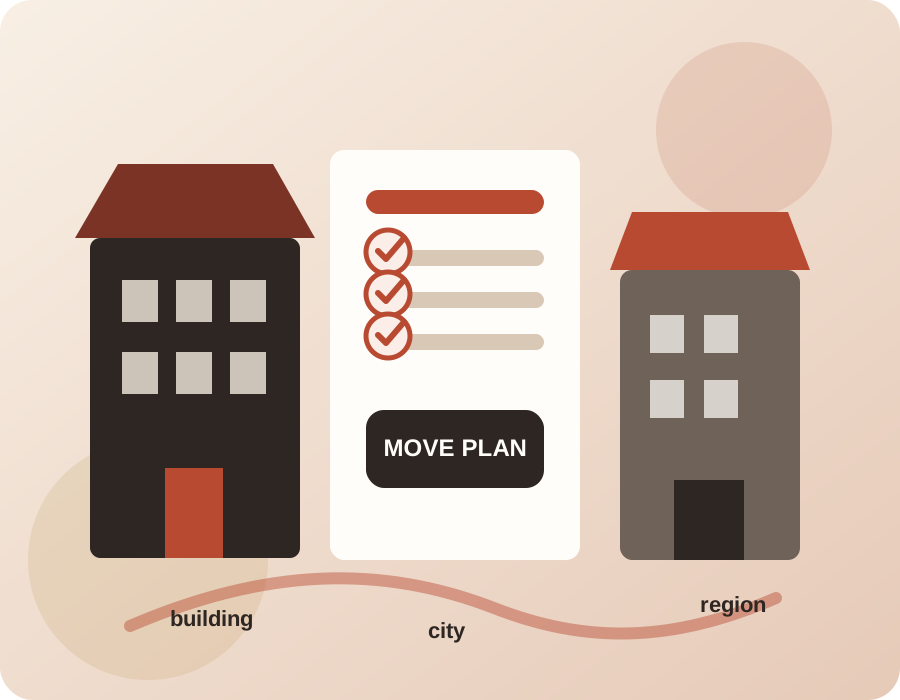
Illustration of a downtown apartment, checklist, City Hall, transit, and civic service icons.

Why this matters

This isn’t just a move. It’s a civic onboarding.

Downtown living is different from a typical suburban move. You’re joining a building ecosystem, a street grid, an event district, a transit network, and an active city government. The easier your first month feels, the more you’ll enjoy the everyday advantages of downtown: walkability, architecture, transit access, major events, public spaces, and neighbors who care about the core of St. Louis.

Relocation rhythm

Your 30-day move-in runway.

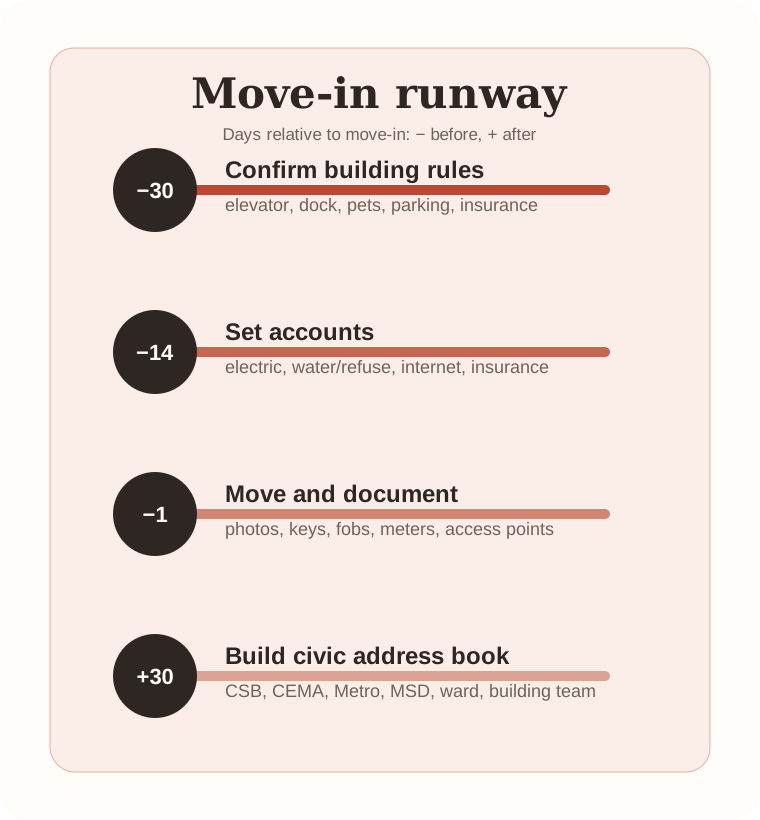
Downtown moves are smoother when you schedule building logistics before you schedule the truck. Use this as a starting point, then tailor it to your lease, condo rules, or building-management process.

Four-stage downtown relocation timeline.
  1. 130 days before

    Confirm the building rules

    Ask about loading-dock access, freight-elevator reservations, certificate-of-insurance requirements for movers, move-in windows, after-hours policies, package rooms, pet rules, parking, bike storage, and trash/recycling rooms. Historic lofts and modern towers can have very different procedures.

  2. 214 days before

    Start utility & account setup

    Confirm whether your unit is electric-only or uses gas. Set up electric service, water/refuse if you’re responsible for it, internet, renter or homeowner insurance, and any building portal. Ask the property manager which accounts are owner-paid, tenant-paid, or included in assessments.

  3. 3Move-in week

    Walk the block & document the unit

    Photograph unit condition, meter locations, fobs, garage remotes, appliances, and mailbox keys. Walk to the nearest MetroLink station, grocery stop, pharmacy, dog-relief area, trash room, and secure package area before you need them.

  4. 4First month

    Build your civic address book

    Bookmark the City Address & Property Search, Citizens’ Service Bureau, Metro trip planner, MSD billing, CEMA emergency alerts, and your building’s maintenance process. Save your ward and alderperson info with your building contacts.

Before you sign

Ask these before you commit to a downtown building.

The right unit isn’t just the one with the best windows. Understand the ownership structure, parking, utilities, and event-day patterns before move-in.

What type of building am I joining?

Condo associations, rental towers, historic loft conversions, and mixed-use buildings each handle maintenance, insurance, common areas, deliveries, noise, and guest access differently.

What’s included, and what’s separate?

Clarify electric, gas, water/refuse, sewer, internet, parking, storage, pet fees, move-in fees, amenity fees, and after-hours service charges. A lower rent or HOA payment can mislead if core services are separate.

How does the block behave at night and on event days?

Downtown streets change dramatically for Cardinals games, Blues games, concerts, conventions, parades, runs, closures, or construction. Visit at the time of day you’ll actually come and go.

Who solves what?

Make a simple matrix: building maintenance for unit/common-area issues, garage operator for parking access, utility providers for outages, CSB for city service requests, and 911 for immediate threats.

Accounts & services

Set up the essentials without guessing who owns what.

Some downtown units are individually metered and tenant-managed; others bundle certain services into rent or condo assessments. Always confirm with the lease, purchase documents, condo association, or building manager.

City water & refuse

In the City of St. Louis, water and refuse are administered and billed together. Registering for water service creates the refuse account automatically; missing or damaged roll carts are reported through the CSB.

City Water Division — residential water/refuse setup

Electric

Ameren provides start, stop, and transfer workflows for electric service. Have the account-holder name, full service address, Social Security number, and requested service date ready before you begin.

Ameren — start / stop / move service

Gas, if applicable

Many downtown apartments are electric-only, but some buildings use natural gas for heat, cooking, hot water, or shared mechanical systems. Ask the building manager whether a separate gas account is required before contacting a provider.

Spire — natural gas service

Sewer & stormwater

The Metropolitan St. Louis Sewer District handles wastewater and stormwater billing for the region. If you receive a separate MSD bill, set up online access early to track account numbers and payment preferences.

MSD Project Clear — billing information

Internet & building tech

Ask which providers already serve the building, whether fiber is available, where the in-unit panel is, whether installers need a certificate of insurance, and whether smart locks, intercoms, fobs, or package lockers require separate activation.

Mail, packages & freight

Downtown buildings often have secure package rooms, concierge desks, loading alleys, freight elevators, or limited delivery windows. Update shipping addresses only after you know the exact delivery format the building prefers.

Reporting issues

Use the right path for the right problem.

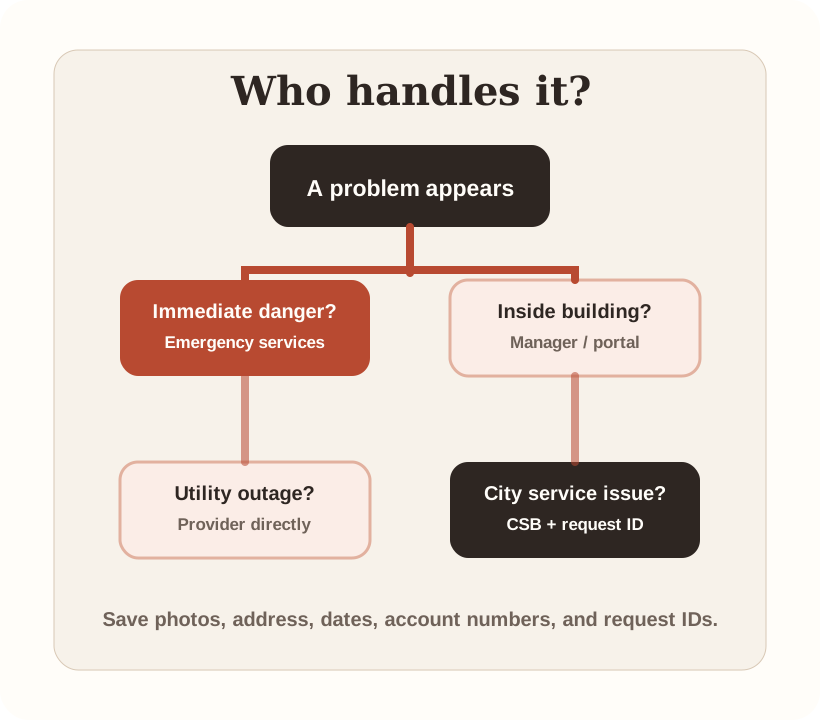
When something is wrong, first decide whether it’s an emergency, a building issue, a utility issue, or a city service request. That single decision saves time and gets the right people responding.

For city service requests, start with CSB.

The Citizens’ Service Bureau is the City of St. Louis customer-service department for complaints and service requests. Include the exact street address, an intersection for traffic issues, and an accurate description. After you submit, CSB provides a service-request number and routes it to the correct department.

Decision tree for emergency, building, utility, and city-service issues.
1

Emergency or immediate danger?

Use 911 for immediate threats to life or safety: fire, violence, medical emergencies, active hazards, or dangerous conditions that cannot wait.

2

Inside the building?

Start with the building portal, property manager, owner, condo board, or maintenance team for leaks, elevator access, door hardware, packages, garage equipment, fobs, common areas, pests, and amenity problems.

3

Utility outage or account problem?

Contact the provider directly for electric, water, sewer, gas, or internet problems. Keep account numbers, outage confirmation numbers, and photos or screenshots in one place.

4

City service issue?

Use the CSB for trash problems, illegal dumping, streetlight outages, potholes, traffic-signal issues, city water problems, and other municipal requests. Save the request number and follow up after the target response date.

Taxes, IDs & vehicles

Relocation details that surprise people.

This section is informational, not tax or legal advice. Verify your own situation with the appropriate agency — especially if you work remotely, split time between jurisdictions, own a vehicle, or operate a business.

City earnings tax

The City of St. Louis imposes a 1% earnings tax on city residents regardless of employer location, and on people who work or perform services within the city regardless of where they live. If you move partway through the year, review the city’s residence rules and forms.

  • Ask payroll whether city earnings tax will be withheld.
  • If self-employed or remote, review the city’s individual earnings-tax guidance.
  • Keep move-in dates and employer work-location records.

Official reference

Missouri driver license or ID

New Missouri residents transferring an out-of-state license or nondriver ID should prepare proof of identity, lawful-status date, Social Security number, and a Missouri residential address. REAL ID requests require additional residency documentation.

  • Bring lease, utility, bank, or other accepted address documents.
  • Use the Missouri DOR checklist before visiting a license office.
  • Confirm whether your prior out-of-state credential must be surrendered.

Official reference

Vehicle title & registration

Missouri DOR says new residents have 30 days from becoming a Missouri resident to title a vehicle. Expect title documents, Form 108, ID/odometer inspection, insurance proof, personal-property-tax or non-assessment documentation, and safety/emissions inspection if applicable.

  • City residents may need emissions-inspection documentation if applicable.
  • Ask the City Assessor or Collector about personal-property-tax records.
  • Don’t leave paperwork until your temporary permit is about to expire.

Official reference

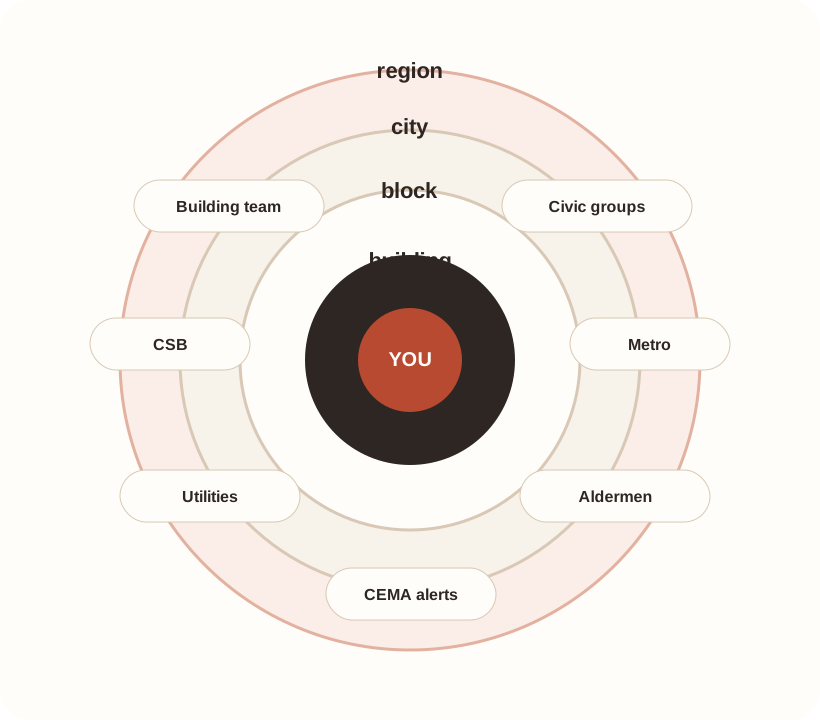
Layered civic map from apartment to building, block, city, and region.

Your civic map

Know the layers around your address.

Your downtown address connects to several layers of decision-making. Learn these early and you’ll know where to ask questions, where to report problems, and where to show up when something matters.

Building layer

Property manager, leasing office, condo association, HOA board, maintenance team, garage operator, concierge, and security desk.

Block layer

Neighboring buildings, retailers, parking operators, nearby institutions, construction sites, event venues, and street-level public spaces.

City layer

Citizens’ Service Bureau, Streets/Refuse, Water Division, Public Safety, CEMA, Health, Parks, Building Division, Collector, Assessor, and Board of Aldermen.

Regional layer

Metro Transit, MSD, Ameren, Spire where applicable, Greater St. Louis Inc., major employers, cultural institutions, and regional transportation connections.

Local institutions

Who shapes the downtown experience?

Downtown is governed, maintained, advocated for, marketed, and lived in by overlapping public agencies, civic organizations, building owners, and residents. This is the practical short list.

City of St. Louis

The city owns core municipal functions: CSB intake, streets, refuse, water, public-safety departments, emergency management, parks, health, codes, taxes, and legislative process through the Board of Aldermen.

Board of Aldermen

The city’s legislative body. It creates, passes, and amends local laws and approves the city budget, with alderpersons representing each ward plus a president.

Greater St. Louis Inc. / Downtown STL

Now hosts the Downtown STL digital home — downtown news, events, plans, retail programs, streetscape initiatives, and information about Downtown Public Safety Ambassadors.

Citizens for a Greater Downtown STL

A downtown advocacy network focused on mobilizing residents, businesses, property owners, and developers to advocate for planning, services, accountability, and solutions for downtown.

Neighborhood & building groups

Downtown resident groups, condo boards, tenant associations, and informal neighbor networks often surface hyper-local issues long before they become citywide conversations.

Metro, MSD, utilities & venues

Regional agencies and private utilities shape daily life through transit, sewer/stormwater service, electric and gas service, event patterns, closures, outages, and maintenance work.

Resident contact map

Save these links and numbers in one note.

Numbers and workflows can change, so verify from the official source before acting. This table is meant to help residents know where to begin.

NeedStart hereWhy it matters
City service requestCitizens’ Service Bureau · 314-622-4800Trash, dumping, streetlight, pothole, water, sanitation, and other city-service problems.
Water / refuse accountCity Water DivisionWater and refuse are connected in the city billing setup.
Emergency alertsCEMA / NotifySTLSevere weather, critical incidents, service disruptions, and evacuation alerts.
Electric serviceAmeren start / stop / moveStart, stop, or transfer electric service around move-in and move-out dates.
Sewer / stormwaterMSD Project ClearBilling, payment options, sewer/stormwater questions, and issue reporting.
Transit planningMetro Transit trip plannerPlan MetroLink, MetroBus, airport, downtown, and regional trips.
Ward & property lookupCity Address & Property SearchFind ward, neighborhood, services, property information, and contacts tied to your address.
Vehicle & ID move-in tasksMissouri Department of RevenueDriver license, nondriver ID, title, registration, inspection, and vehicle documentation.
Pets & animal issuesAnimal Care & ControlPet registration, animal laws, stray or injured animals, and after-hours animal distress guidance.

Special situations

Extra notes for common downtown resident scenarios.

If you have a dog

Confirm pet registration, vaccination records, breed or size restrictions, elevator etiquette, dog-relief areas, waste-station locations, and building quiet hours. Save Animal Care & Control contacts for stray or injured animals.

If you keep a car downtown

Compare included parking, leased garage spaces, street meters, event rates, snow/towing rules, guest parking, EV charging, garage-access reliability, and whether the garage is building- or third-party-operated.

If you work remotely

Check earnings-tax implications, internet redundancy, building conference-room rules, package delivery, cell reception, backup coworking options, and any employer requirements for documenting work location.

If you’re buying a condo or loft

Review association documents, reserves, insurance coverage, special assessments, rental and short-term-rental restrictions, pet policies, roof/window/mechanical responsibilities, parking structure, and litigation history.

If you’re opening a small business

Separate resident relocation from business setup. Licensing, occupancy, signage, sales tax, trash, loading, grease, patio, liquor, health, and fire requirements can each have separate processes.

If accessibility matters

Test the entire route: garage to lobby, curb to door, elevator to unit, transit station to platform, trash and package rooms, emergency exits, sidewalks, curb ramps, and a backup plan for elevator outages.

First-week checklist

Do these before the novelty wears off.

The first week is the easiest time to build good habits. Once the boxes are unpacked, the practical details are much easier to ignore.

  • Save building maintenance, garage, concierge, and emergency contacts.

  • Bookmark CSB, Address & Property Search, Metro, CEMA, MSD, and utility portals.

  • Find your trash/recycling room, mail area, package process, and freight-elevator rules.

  • Walk to the nearest MetroLink station and identify backup bus routes.

  • Confirm earnings-tax, driver-license, vehicle, pet, and insurance tasks that apply to you.

  • Join at least one neighborhood, building, or downtown civic information channel.

Planning a downtown move?

Tell us where you are in the process — touring, comparing buildings, or ready to sign — and we’ll help line up availability, showings, and the practical logistics.

Presented byHSG Realty

Keep exploring

Pair the toolkit with the rest of the resident resources.