
Skip to content
St. Louis · xyence.io

Resident resource

Downtown St. Louis Living Primer

A practical, welcoming guide to settling into downtown: how to read the districts, report problems, find daily necessities, plan around event traffic, and plug into the civic networks shaping the neighborhood.

Illustration of downtown St. Louis living

Who this is for

For new residents, current residents, and downtown-curious buyers

Downtown is both a neighborhood and the region’s front porch. It has everyday routines — groceries, dog walks, transit, coffee, lunch spots, HOA realities — layered with major civic, sports, convention, and visitor activity. Living here gets easier once you understand the rhythm.

3

resident habits that help

  1. Know where to report public issues.
  2. Plan around games, concerts, and conventions.
  3. Learn the district names people actually use.

Reporting issues

When something needs attention, route it clearly.

Downtown residents see the neighborhood at street level every day. That makes you one of the best early-warning systems for burned-out lights, broken sidewalks, blocked rights-of-way, overflowing trash, graffiti, and recurring safety concerns.

Emergency or immediate danger

Call 911 for active emergencies: fire, medical emergencies, violence, or immediate threats to life and safety.

Public right-of-way or city-service issue

Use the City of St. Louis Citizens’ Service Bureau (or call 314-622-4800) for streetlights, potholes, traffic signals, trash, sidewalks, weeds, graffiti, and related public-infrastructure concerns.

Building-specific issue

Contact your property manager, HOA, condo association, or building engineer for access systems, elevators, package rooms, garage doors, leaks, maintenance rules, and private common-area concerns.

Report the right thing to the right place

Start with safety, then route routine problems through the city, your building, or the civic network.

  1. 1

    Emergency?

    Immediate danger, fire, violence, or a medical emergency.

    Call 911.

  2. 2

    Public issue?

    Potholes, streetlights, trash, graffiti, sidewalks, signals.

    Use the CSB / city request.

  3. 3

    Building issue

    Access, package rooms, leaks, elevators, garage doors.

    Contact building management.

  4. 4

    Recurring or shared

    Neighborhood-wide patterns worth raising together.

    Bring it to a civic group.

Civic organizations

Downtown works better when residents know the organizations in the room.

Downtown Neighborhood Association

A resident-facing neighborhood association is often the most approachable place to start when you want to meet neighbors, understand recurring quality-of-life issues, or find out what conversations are already happening.

Best use: Neighbor connection, resident concerns, local communication, and issue pattern-sharing.

Citizens for a Greater Downtown St. Louis

A civic advocacy frame for people who want downtown to function as a stronger, safer, more vibrant urban center. This belongs in the primer as a place for residents to think beyond their own building.

Best use: Advocacy, accountability, resident voice, and larger downtown-improvement priorities.

Downtown Forward

A downtown revitalization and coordination lane. Residents should know this name because many downtown problems require alignment among property owners, businesses, institutions, civic groups, and city agencies.

Best use: Big-picture downtown strategy, public-private coordination, and resident awareness of revitalization work.

Many buildings also run their own community space. If yours has a Town Square, that’s the fastest way to reach neighbors and management.

Living options

Lofts, conversions, and modern highrises each ask for a different kind of resident.

Brick

Historic lofts

High ceilings, exposed brick, timber or concrete columns, factory windows, open floor plans, freight-building bones, and a stronger sense of architectural story.

Reuse

Adaptive conversions

Many downtown residences started as warehouses, offices, banks, hotels, or institutional buildings. Conversion living blends historic shells with newer residential systems.

Glass

Modern highrises

Modern highrises tend to emphasize views, amenities, controlled access, structured parking, fitness rooms, concierge-style services, and more predictable mechanical systems.

Amenities & necessities

The downtown routine is smaller than the skyline makes it feel.

Daily life clusters around reliable anchors: groceries, parks, transit stops, dog walks, coffee/lunch spots, and the streets you prefer at different times of day.

Groceries
Schnucks Downtown is the central full-service grocery anchor for many downtown residents.
Green spaces
Citygarden, Lucas Park, the Gateway Arch grounds, and the broader Gateway Mall give residents quick access to outdoor breaks.
Dog parks
Lucas Dog Park and the Laclede’s Landing dog park are useful reference points for residents with dogs.
Wayfinding
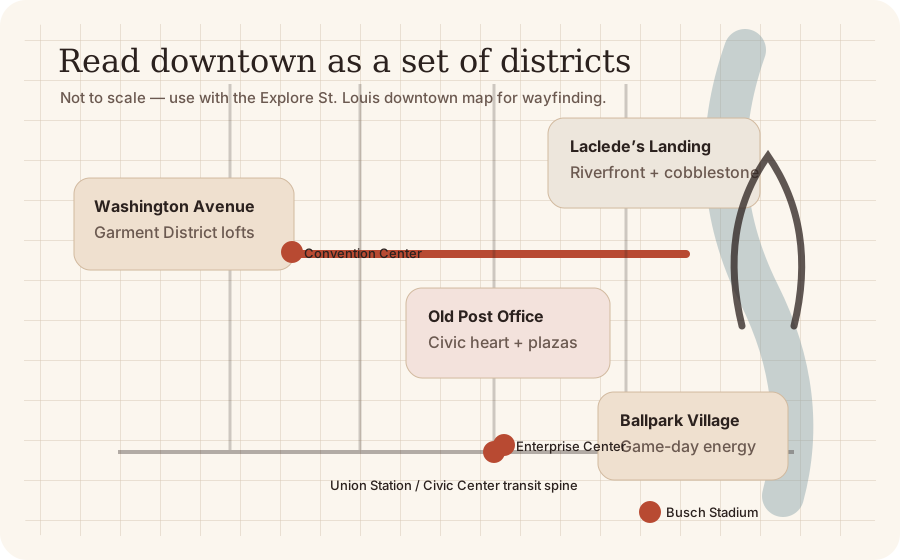
Still learning the grid? The Explore St. Louis downtown map is a good orientation to venues, hotels, and visitor districts.

Entertainment

Sports and events are part of the lifestyle.

Downtown is home to the St. Louis Cardinals at Busch Stadium and the St. Louis Blues at Enterprise Center. That’s a major quality-of-life advantage — but it also means residents need game-day habits.

  • Check home-game and concert schedules before planning guests, dinner reservations, or garage access.
  • Expect heavier traffic, rideshare surges, and crowded sidewalks before and after major events.
  • Learn your alternate routes into your garage or building.

Public transit

MetroLink is the downtown resident’s shortcut.

MetroLink connects downtown to the airport, Central West End, Cortex, Midtown/Grand, Forest Park, Clayton, and Illinois-side destinations. Downtown stations — Convention Center, 8th & Pine, Stadium, Civic Center, Laclede’s Landing, and Union Station — help residents move without defaulting to a car.

Settling in

A first-week checklist for a new downtown home.

A lot of downtown living is handled by your building — but a few setup steps are still on you. Confirm what your HOA or property manager already covers, then work through the rest.

Utilities

Set up electric with Ameren Missouri, gas with Spire, and know that sewer/stormwater is billed by MSD Project Clear. Water is City of St. Louis. In many loft and highrise buildings some of these are bundled into HOA dues — ask what your building already covers.

Internet & TV

Availability varies by building. AT&T (incl. fiber in many downtown buildings) and Spectrum are the common providers; some buildings offer a bulk/preferred provider. Confirm what’s wired before you schedule installation.

Parking

Most downtown residences include or offer structured/garage parking — confirm whether a space is deeded, rented, or waitlisted. On-street parking is metered; learn your building’s garage entrance and an alternate route for event days.

Mail & packages

File a USPS change of address, and learn your building’s mailroom, package room, or locker system and its hours. High-rise and loft package handling differs building to building.

Trash & recycling

In most downtown buildings, trash and recycling are handled through building management (chutes, dumpsters, or valet), not curbside pickup — check the rules for your floor and any bulk-item process.

Make it official

Update your Missouri voter registration, driver’s license address, and vehicle registration after you move. Keep a copy of your lease or condo docs handy for building access and parking setup.

Key sub-districts

Downtown makes more sense when you learn the names.

Washington Avenue / Garment District

Historic warehouse-to-loft corridor, restaurants, bars, City Museum adjacency, and many classic loft buildings.

Laclede’s Landing

Historic riverfront district with cobblestones, brick warehouses, Arch proximity, and a distinct visitor/nightlife history.

Old Post Office Plaza

Civic and architectural center point near offices, courts, residential conversions, plazas, and library/cultural routes.

Ballpark Village

Game-day entertainment district next to Busch Stadium with high event energy and crowd surges.

Gateway Mall / Market Street spine

A chain of civic green spaces — Citygarden, Kiener Plaza, Soldiers Memorial, Union Station — and event venues.

Simplified downtown St. Louis districts map

Food options

Keep a short list of dependable neighborhood spots.

Downtown dining changes over time, so treat this as a living list. Start with a few recognizable anchors, then expand based on what’s open near your building.

Questions about moving downtown?

Tell us what you're looking for — a loft, a highrise, for sale or for lease — and we'll share buildings, availability, and a realistic picture of daily life here.

Presented byHSG Realty

Keep exploring

Put the primer to work — see the buildings, compare the cost of living, or meet neighbors.

Downtown St. Louis Living Primer — St. Louis · xyence.io